A dawn-lit desert with distant mountains and a lone bird in flight

Poet · Philosopher · Guide of the Soul

Ahmatjan
Osman

ئەخمەتجان ئوسمان

“watching grass sprout from cracks in the asphalt”

ئاسفالت يېرىقلىرىدىن چىملارنىڭ ئۈنۈشىنى كۆزەتكەچ

from “The Nights Passing Endlessly through Scheherazade’s Mouth” · trans. Joshua L. Freeman

A master who writes, speaks, and teaches across Uyghur, Arabic, English, Turkish, and Chinese — illuminating the human essence and guiding us to find our true souls. A lifelong patriot, he has devoted his voice to the freedom of East Turkistan and a more just future for the Uyghur Nation.

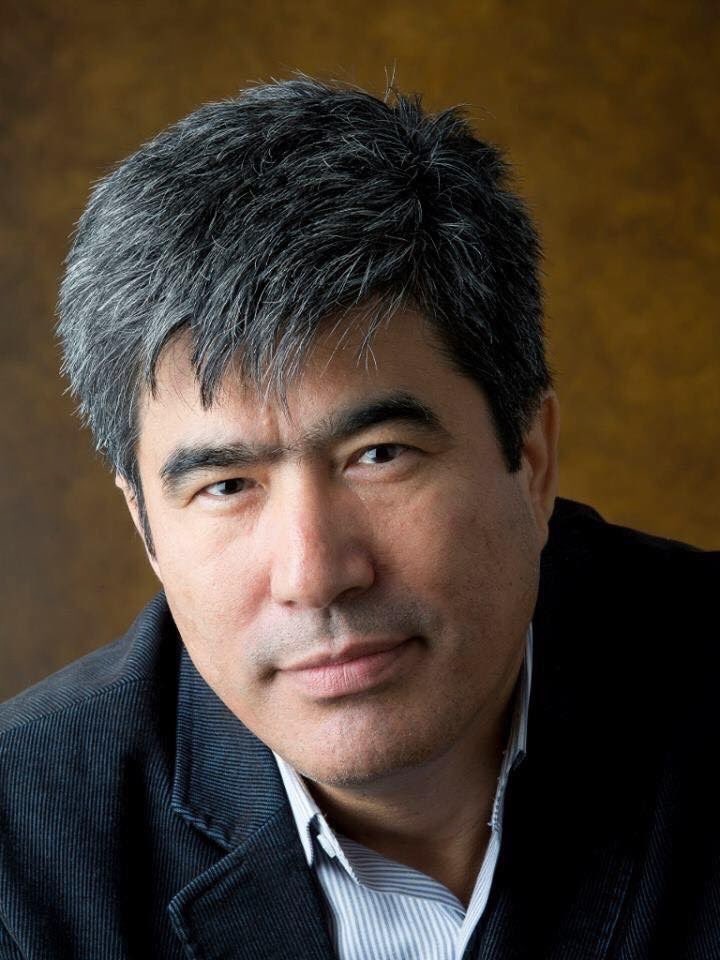
Portrait of Ahmatjan Osman

Ahmatjan Osman.

I.   The Master

A poet-philosopher who teaches the human essence — and a guide to the true soul.

ئالىم

Born in 1964 in Ürümqi, Ahmatjan Osman — whose name is also written Ekhmetjan or Exmetjan Osman — grew up between the city's edges and a wide emptiness where, as he recalled, “the only things that connected me to the outside world were the Sun, Moon and stars.” His mother sang him folk poetry; by thirteen, his verses were read on the radio. He would become the foremost Uyghur poet of his generation and the leader of its New Poetry movement.

Yet his reach has never stopped at one language. Studying in Damascus, he mastered Arabic so completely that the great poet Adonis became an admirer; his work now lives in English translation, and his spoken dialogues move freely through Turkish and Chinese. He has translated Rumi, Octavio Paz, Paul Celan, Fernando Pessoa, and Adonis into Uyghur. Across all of them, one subject remains: the human essence, and the soul's long road home.

He has never separated the poet from the patriot. Through years of exile — and through his work as a writer and broadcaster — he has given his voice to the cause of his homeland: speaking against the oppression of the Uyghur Nation and for the freedom and dignity of East Turkistan. For him, the defense of a people and the defense of the human soul are the same labor. From November 2015 to October 2018 he served as the third President of the East Turkistan Government in Exile — a documented public role that placed the poet, for a time, at the head of his people's struggle for self-determination.

Today he lives in Toronto, where he writes in English, Uyghur, and Arabic. There he is less a distant literary figure than a living teacher. In his ongoing dialogues he gathers listeners around a single question — how to become who we truly are — and answers it the way a poet does: with presence, tenderness, and unflinching honesty.

Five Languages, One Essence

ئۇيغۇرچە

Uyghur

Mother tongue · the homeland of his poetry

العربية

Arabic

Six collections · admired by Adonis

English

English

Writes today · international readership

Türkçe

Turkish

Dialogue · kinship of the Turkic world

中文

Chinese

Conversation · bridge across cultures

II.   In Other Voices

How the world reads him.

باشقىلارنىڭ تىلىدا

Lines left by publishers, magazines, anthologies, and fellow poets — each carried back to the page that first set it down.

She names Ahmatjan Osman — in the same breath as Mallarmé, Ibn Arabi, and Rumi — among the poets who inspire her own work.

Fatimah Abdulghafur Seyyah

Uyghur poet & translator of Osman · reported in the New Statesman, 2022

The foremost Uyghur poet of his generation, he channels his ancestors alongside Mallarmé and Rimbaud to capture the sacred and philosophical, the ineffable and the transient.

Phoneme Media

Publisher of Uyghurland, the Farthest Exile

His poems hold the rebellion of Shah Meshrep, the refined language of Nawayi, the lament of Abdukhaliq Uyghur, and the precision of Sadir Palwan.

Memtimin Ela

From his introduction to Ahmatjan Osman: Selected Poems, 2015

Among the most influential Uyghur poets of his generation, and founder of the New Poetry movement that emerged in Uyghur literary circles in the 1980s.

Granta

Magazine of new writing

The wolf of life begins to howl each time I take you in my arms.

From a ghazal in Uyghur Poems

ed. Aziz Isa Elkun · Everyman’s Library, 2023

In fifty years our language will be… — I am talking to the Uyghur poet Ahmatjan Osman as he drives on a highway in Toronto.

Jeffrey Yang

Poet & translator, in “The Mask of the Translator”

One of the foremost Uyghur poets of his generation — a vital voice carried into English for the first time.

Words Without Borders

Premier home of world literature in translation

Having not written poetry in fifteen years, he presented four new poems — in both Uyghur and English — of powerful, luminous imagery.

PEN Sydney

On “Tales of the Wind: A Night of Uyghur Poetry,” 2023

Quotations are reproduced from their original publishers and outlets; follow each card to its source.

III.   The Teaching

What he teaches, and where it leads.

تەلىمات

For Osman, poetry is not decoration but a way of seeing. His teaching gathers a lifetime of exile, language, and longing into a path anyone can walk — inward, toward the soul.

01

The Human Essence

Beneath nation, language, and exile lies a single human essence. Osman's work returns again and again to what is most ancient and most shared in us — the soul that precedes every border.

02

All Is One

He gathers science and religion, literature and history, poetry, culture, and mysticism into a single unity — drawing not on one faith but on many. In his vision the disciplines and traditions are not rivals but facets of one truth, and the poet's work is to hold them together in a single, limitless whole.

03

Language as Homeland

“The Uyghur language is my real homeland as a poet.” To follow him across five languages is to learn that words are not tools but dwellings — places where the self can finally rest.

04

Exile as Inner Journey

He turns the wound of exile into a path inward. To lose a country, he teaches, is to be sent in search of the only homeland that cannot be taken: the true soul.

05

The Ego and the Soul

He draws a sharp line between the self and the soul. The self is the selfish ego; the soul is the truth that lives in every human being. In his ongoing dialogues — “This Is How I See It” — he teaches that all is one, and that the presence of the self is the enemy of unity and of being limitless.

06

Homeland & Human Dignity

His patriotism is inseparable from his philosophy. To speak for the freedom of East Turkistan and the dignity of the Uyghur Nation is, for Osman, to defend the human essence itself — the right of every soul to live, remember, and speak in its own voice.

IV.   Listen

His living voice — “This Is How I See It.”

ئاڭلاڭ

Beyond the page, Osman teaches through dialogue. In these recorded conversations and readings he speaks on love, independence, the soul, and the art of becoming oneself.

Watch all
Dialog · Uyghur

Love & Independence

“This Is How I See It” · Ahmatjan Osman & Fatima Sayyah

Dialog · Uyghur

Nation, State, Homeland

“This Is How I See It” · episode 30

Follow the full programsYouTube — Dialog

V.   The Work

Selected Poems

شېئىرلار

A gathering of poems the poet shared himself, written directly in English — brief meditations on being, silence, exile, and the soul — alongside verse translated from his Uyghur and Arabic in Uyghurland, the Farthest Exile.

On the formless origin

Which

It is that

that WHICH in every direction

in everywhere…

yet it doesn’t take the direction

or the place of anything

It is a pronoun without a noun

yet it is the origin of every name

No one can define it

nor can it define itself

for it has no self

What is it?

No one knows!

yet it is the source of all knowledge

Posted by the poet · @AhmatjanO, Apr 4, 2021

On sacrifice and being

Contemplation of a Straw

Straw is worthless when it is a straw

When it burns, it is the fire we used to worship

Straw is profane as smoke and ash

yet it’s sacred as light and warmth

It burns to be

in the Being

It sacrifices for the profane and sacred

The light passes, so does the warmth

Smoke and ash remains…

Posted by the poet · @AhmatjanO, Apr 3, 2021

On the self and the world

Synthesis

Flight is a thought of bird —

this is what the twig recalls

as I twigged looking up at the sky what I am

I am the near tree, the distant space,

and the bird in between

Posted by the poet · @AhmatjanO

On art and revelation

When the Truth Is Among Us

Just as a painter makes us touch

what cannot be touched

with his colors

the light and the shadow…

just as a poet makes us feel

what cannot be felt

with his words

the self and the silence…

just as a bird makes us perceive

what cannot be perceived

with its flight

the sky…

When the truth is among us

we are capable of reflection or burning

Posted by the poet · @AhmatjanO, Mar 31, 2021

On a mother’s counsel

The Whole Story

Don’t let your feet leave the ground

let your head touch the sky

Mother said after completing her story

This is the whole story

After my lifetime is almost over

and here I am:

the light wades in the mud

Posted by the poet · @AhmatjanO

On solitude and being

Beingless Memory

i am alone

this is my memory

i have nothing else

i remember that i am restless

i want to be

— what do you want, restless memory?

— i want to stop being a memory!

but you are alone

remembering and restless

whoever you are

you are that —

the beingless being

Posted by the poet · @AhmatjanO

On the hunted self

Impossible Prey

Each morning

The paths come out from their dens

To hunt me

I am a strange beast

Questions spring up from my footstep

Translated by Fatimah Abdulghafur Seyyah

Posted by the poet · @AhmatjanO

On the solitary self

Split Sun

Counting the fingers from one to ten

Spelling the letters from A to Z

Measuring the distance between two suns

One in a drop of water, another in the sky

Man is a prisoner in the solitary self

There is a bird crosses the roadside window

And the watchful eyes on a tree

Posted by the poet · @AhmatjanO

On silence

Alone

Alone is the stone

Silence made it an introvert

Alone is the bird

Silence made it fly

Only the silence alone

Nothing makes it introverted

Nothing makes it flying

Posted by the poet · @AhmatjanO

On fear and hope

Cain and Abel

Once upon a time

Fear and Hope were the sons of man

Hope murdered Fear, and man was happy

Happiness was the ghost of Fear, but man did not know

Man’s ignorance wreaked havoc on himself

Posted by the poet · @AhmatjanO, Mar 16, 2021

On universal language

Interconnectedness of Gardens

Since every speech being a thought

Comes the time of universal language

It is the language from soul to soul,

Rimbaud said.

He meant the gods

the interconnectedness of Gardens.

Posted by the poet · @AhmatjanO, Mar 10, 2021

On longing for the homeland

Dewdrop

A shining dewdrop settled on my cheek

Said I:

  Brother, I’m no flower!

Said the dewdrop:

    Why would I bother

  coming here at dawn

if you did not long for your homeland?

Translated by Joshua L. Freeman · Calligraphy by Efvan

Posted by the poet · @AhmatjanO

A sequence in fourteen movements

The Moons of Childhood

1 · Dream

When the moon floated far from childhood

there was a dream that never grew up

Deaf, dumb, blind it soared

upon millions of wings

toward the graveyard of my ancestors

a graveyard whose name I later learned

when older: Earth

2 · Mourning

When the moon floated far from childhood

I stole it and hid it inside my pencil case

The old darkness was awakened

and slipped out to the deaf roads

calling in a mournful voice,

O my grandson where are you my moon…?

3 · Art Dealer

When the moon floated far from childhood

I measured the sun by days

and the days by dreams

I saw the night on the sidewalk

sitting cross-legged in front of a pile

of moons and stars for sale

4 · The Fisherman and the Golden Fish

When the moon floated far from childhood

the night became the starry sea

and the moonlight golden fish

The horizon hunted the fish each morning

and returned them to the sea at dusk

5 · Sadness

When the moon floated far from childhood

I cried…

Mother wiped my tears away with a laugh

as I told her how the moon

started to drown in the waves of clouds

and so I threw out my arms

to save it from vanishing

6 · God’s Pupil

When the moon floated far from childhood

I was sitting at the edge of nothingness

Grandfather whispered to my parents

that I was sitting in God’s pupil

so it didn’t matter

if His eyes were open or closed

7 · Night’s Presence

When the moon floated far from childhood

it was so tired that it fell asleep on a cloud

Long before morning it had a bad dream

and tumbled to the ground

in that moment the night’s presence

woke my heart

8 · Escape with the Earth

When the moon floated far from childhood

the rainbow tried so hard

to carry Earth between its arms

and all day I wondered

where was it planning to escape with the Earth?!

9 · Knot

When the moon floated far from childhood

the sun had barely risen

and sea said to land,

“What if, my friend, we tied a knot

between the colorblind moon

and the forgetful sun?”

10 · Metaphysical Questions

When the moon floated far from childhood

the wind rested on the roof beside me,

whispering: Where did it begin?

Where will it end? What does it want?

11 · Language Practice

When the moon floated far from childhood

I tripped over the night

but the moon still pulled me back

the same way the sun held me up

whenever I stumbled over the day

12 · Small Window

When the moon floated far from childhood

through a small window

I watched a dream leave the night behind

It was morning and I saw my father

returned from the war

lying in a pool of his own blood

Then my small window shattered

13 · Waiting

When the moon floated far from childhood

I wanted to pluck the stars from the sky

I stayed up the long night waiting

and the moon never shut its eyes to sleep

14 · Moonlit Speech

When the moon floated far from childhood

it vanished—

the stars trembled in the darkness

my heart climbed high into the sky

so that my share of the night

reflected its silver light

ذات قمر نأى في الطفولة

١ · حلم

ذات قمر نأى في الطفولة...

كان ثمة حلم

لا يكبر

أصم، أبكم، أعمى

يرفرف هناك بملايين الأجنحة

على جبانة أجدادي

التي عرفت اسمها لما كبرت:

الكرة الأرضية

٢ · شقاوة

ذات مساء نأى في الطفولة...

سرقت القمر

وخبأته داخل مقلمتي

استيقظت العتمة العجوز

ثم خرجت إلى الطرقات الخرساء

وهي تنادي بصوتها الباكي:

- يا حفيدي!

أين أنت يا قمري...؟!

٣ · تاجر عاديات

ذات صباح نأى في الطفولة...

وأنا أقيس الشمس بالنهار

والنهار بالأحلام

رأيت الليل على الرصيف

يجلس القرفصاء

وأمامه «بسطة» من الأقمار والنجوم

٤ · الصياد والسمكة الذهبية

ذات حلم مؤجل في الطفولة...

كان الليل بحراً مقمراً

والقمر سمكة ذهبية

وكان الأفق يصطادها كل فجر

ثم يعيدها إلى البحر من جديد

كل غسق

٥ · حزن

ذات حزن مؤجل في الطفولة...

كم بكيت

ودمعي تكفكفه أمي

وهي تقهقه بملء شدقيها

وأنا أخبرها كيف أن القمر

اختفى غارقاً في أمواج الغيوم

وأني

كنت أمد كلتا ذراعيّ

لإنقاذه

٦ · بؤبؤ الله

ذات قمر نأى في الطفولة...

كنت جالساً على حافة الشرود

حين وشوش جدي والديّ

بأني جالس في بؤبؤ الله

فلا هم إن كانت عيونه

مفتوحة

أو مغمضة

٧ · الإحساس بالليل

ذات حداد مؤجل في الطفولة...

غفا القمر المتعب

مستلقياً على الغمام

ثم هوى قبيل الفجر إلى الأرض

من فرط الكابوس

حينئذ

استيقظ في قلبي

الإحساس بالليل

٨ · الهروب بالأرض

ذات مطر نأى في الطفولة...

حاول جاهداً قوس القزح

أن يحمل الأرض بين ذراعيه

يومها

تساءلت طويلاً:

ترى، إلى أين كان ينوي

أن يهرب بها؟!

٩ · عقد قران

ذات خاطر مؤجل في الطفولة...

أسرّ البحر لليابسة

ساعة السحر:

ماذا لو، عزيزتي، عقدنا القران

بين القمر السقيم بعمى الألوان

والشمس المصابة

بفقدان الذاكرة؟

١٠ · تساؤلات ميتافيزيقية

ذات غسق نأى في الطفولة...

استلقت الريح على السطح

بجانبي...

كانت غارقة في التفكير:

أين ابتدأت؟

أين ستنتهي؟

ماذا تريد؟...

١١ · تدريب لغوي

ذات درب نأى في الطفولة...

كان القمر يسند قامتي

كلما سقطت على الليل

كما كانت تسندني الشمس

كلما تعثرت بالنهار

١٢ · نافذة صغيرة

ذات ربيع نأى في الطفولة...

كان لي نافذة صغيرة

كنت أشاهد منها في الصباح

حلماً غادرني في الليل

مرة

لمحت أبي عائداً من الحرب

متدثراً بنعشه

فتحطمت آنذاك

نافذتي الصغيرة

١٣ · انتظار

ذات فرح مؤجل في الطفولة...

أردت أن ألم النجوم

من السماء

لكم بقيت ليلتها منتظراً

فما كان يغمض القمر جفنيه

ويغفو

١٤ · كلام مقمر

ذات خوف مؤجل في الطفولة...

اختفى القمر

وكانت النجوم ترتعد في الظلام

صعد قلبي أعالي السماء

فكانت حصتي من الليل

أكثر إقماراً

Translated from the Uyghur & Arabic by Jeffrey Yang with the author

From Uyghurland, the Farthest Exile · also in Technicians of the Sacred (3rd ed.)
VI.   The Books

A life in poetry — collections, an essay book, and translations across languages.

ئەسەرلەر

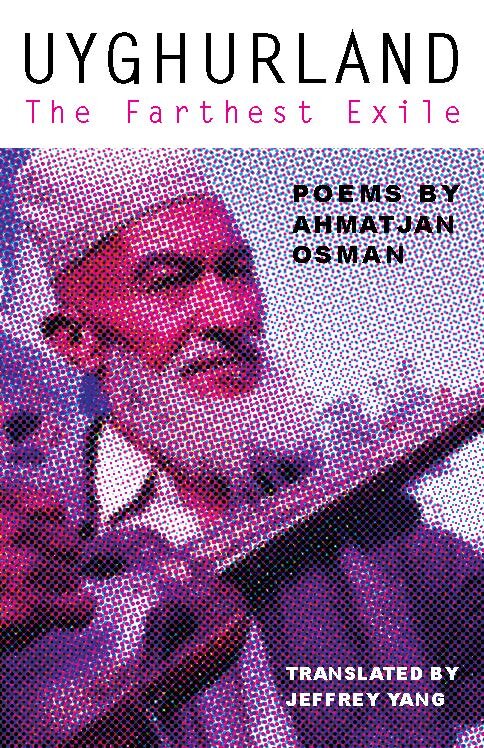
Cover of Uyghurland, the Farthest Exile
In English · 2015 · Phoneme Media / Deep Vellum

Uyghurland, the Farthest Exile

Translated by Jeffrey Yang with the author. The first collection of Uyghur poetry ever translated into English; long-listed for the 2016 PEN Award for Poetry in Translation.

Read & Order
Original Collections & Translations
  • The Second Fall

    Al-Suqût al-thânî

    1988

    Arabic

  • The Mystery of Weddings

    Lughz Al-a'araas

    1990

    Arabic

  • Ode to a Uyghur Girl

    ئۇيغۇر قىزى لېرىكىسى

    1992

    Uyghur

  • Season of the Soul

    روھ پەسلى

    1996

    Uyghur

  • Guardian of the Self

    Al-wasiy Ala Al-thaat

    1997

    Arabic

  • As Though

    Ka'an

    1998

    Arabic

  • In Ruins of Sumer Where I Reside

    Fiy Atlaar Somar Haythu Oqiym

    2003

    Arabic

  • My Share of the Night

    Hissaty Min Al-layl

    2007

    Arabic

  • Oh, Land of Uyghurs

    ああ、ウイグルの大地

    2015

    Japanese translation

  • Uyghur Poet: Selected Poems of Ahmatjan Osman

    ウイグルの詩人 アフメットジャン・オスマン選詩集

    2015

    Japanese translation

  • Selected Poems of Ahmatjan Osman

    Ehmetjan Osman Tallanma She'irliri

    2015

    Uyghur

  • Poetry, What How

    شېئىر نېمە، قانداق

    2024

    Uyghur

Anthologies & Periodicals
  • Anthology2017

    Technicians of the Sacred (Third Edition)

    Edited by Jerome Rothenberg · University of California Press. The landmark global poetry anthology — a touchstone since 1968 — includes Osman’s “The Moons of Childhood,” placing his work among the world’s essential poetries.

  • Periodical2024

    Granta (Issue 169)

    “Ancestors,” translated from the Uyghur by Joshua L. Freeman, in the journal often regarded as the home of new international writing.

  • Anthology2023

    Uyghur Poems (Everyman’s Library Pocket Poets)

    Edited by Aziz Isa Elkun · Alfred A. Knopf. The first English-language anthology of Uyghur poetry includes a ghazal by Osman — “the wolf of life begins to howl each time I take you in my arms.”

  • Anthology2021

    The Contest of the Fruits

    Slavs and Tatars · MIT Press. A book on Uyghur language, politics, and humor — departing from a 19th-century Uyghur satirical poem — that features his poetry.

  • PeriodicalOnline

    Ziyouz · Uyghur Poetry Anthology (Uzbekistan)

    Uzbekistan’s state-registered literary portal presents him — as “Ahmadjon Usmon” — among the notable voices of Uyghur modern poetry for Uzbek readers.

  • Anthology2020

    The Heart of Strangers: A Field Guide to Exiles

    Edited by André Naffis-Sahely · Pushkin Press. An anthology of exile literature gathering his work among writers of displacement across centuries.

  • Periodical2012

    Words Without Borders

    “The Nights Passing Endlessly through Scheherazade’s Mouth,” translated from the Uyghur by Joshua L. Freeman, in the September 2012 issue.

  • Periodical2011

    Sinoturcica

    “Three Poems by Exmetjan Osman,” translated and introduced by Joshua L. Freeman — including “Sadir in Search of His Five Orphaned Children” (1986).

  • Anthology2015

    Yang Lian · Poetry Crosses Conflict (Taiwan)

    The exile poet Yang Lian translated “The Nights Passing Endlessly through Scheherazade’s Mouth” into Chinese and wrote an accompanying essay, published in his book 发出自己的天问 1978–2015 (Showwe Publishing, Taipei).

  • Periodical2004

    Al-Quds Al-Arabi

    His Arabic poetry appeared in the pan-Arab daily (London), placing his voice within the wider Arabic literary world.

VII.   The Movement

Two movements, forty years apart.

گۇڭگا شېئىرىيىتى

In the 1980s, Osman became the leading voice of gungga — meaning “hazy” or “misty” — the Uyghur New Poetry movement. It broke from the inherited metrical forms, turning instead to free verse, metaphor, and symbol, where a poem's title need not name its subject and meaning gathers like fog.

His poem “Treacherous Mountains,” published in the Ürümqi literary magazine Tengritagh, became a touchstone of the movement and sparked fierce debate about tradition and authenticity in Uyghur letters. Though the movement quieted after his exile, its influence runs through a later generation of Uyghur poets.

Toronto · 2025 · The Diaspora

Kök — a movement toward oneness.

كۆك

In 2025, from exile in Toronto, Osman founded Kök — a movement born within the Uyghur diaspora. Returning to the ancient Book of Oghuz Khan, he reads its epic anew in the light of oneness and nothingness: not as a tale of conquest, but as a parable of the soul dissolving into the whole.

Kök calls for unity — the shedding of the selfish self and the turn toward a truly liberated soul, and a freer world. Within the diaspora it has struck a deep chord, hailed by readers as one of the newest and most meaningful movements in recent Uyghur history.

Constellations — his influences

Uyghur folk poetryShah MeshrepAli-Shir Nava'iAdonisPaul CelanStéphane MallarméArthur RimbaudOctavio PazRumiFernando Pessoa

VIII.   The Journey

From Ürümqi to the farthest exile.

سۈرگۈن

1964

Ürümqi

Born in Ürümqi, in the Uyghur homeland. His mother sang him folk poetry and told him Uyghur tales; the Sun, Moon, and stars, he said, “comprised my dream world.”

1977

Ürümqi

Three of his poems are read on Ürümqi radio when he is thirteen — his first appearance before an audience.

1980s

Ürümqi

Becomes the leading voice of gungga (“hazy”) — the Uyghur New Poetry movement — turning Uyghur verse toward free form, metaphor, and modernism.

1982

Damascus

Wins a scholarship to study Arabic literature at Damascus University, among the first Uyghur students abroad after the Cultural Revolution. Earns bachelor's and master's degrees and masters Arabic.

1990

Ürümqi

Returns home to work as a journalist and write essays on literary theory.

1994

Syria

After a two-month arrest, he flees to Syria. There the Syrian poet Adonis becomes an early admirer of his Arabic verse.

2004

Exile

Deported from Syria under pressure; some 270 figures of the Arab poetry world, Adonis among them, sign a petition in his defense. Later that year he receives asylum in Canada.

2015–18

Exile

Serves as the third President of the East Turkistan Government in Exile, carrying his lifelong devotion to his homeland into public office.

Today

Toronto

He lives in Toronto, writing in English, Uyghur, and Arabic and guiding a global audience through his dialogues — speaking and teaching across five languages.

X.   Invite Him

Bring his voice to your stage or classroom.

تەكلىپ

Ahmatjan Osman reads, lectures, and teaches across five languages. To invite him for a reading, a talk, a workshop on poetry and the soul, or an interview, send a note — or reach him directly on social media.

He is available for public speeches, visiting lectures, and literary events worldwide.

Fees & format
Available in person or virtually (livestream readings are welcome). Honorarium is negotiable by occasion; for in-person events outside Canada, travel and accommodation are typically covered by the host. Community, student, and nonprofit gatherings are considered case by case.
Languages
Readings and talks in Uyghur, Arabic, and English; conversational in Turkish. Bilingual readings (original beside translation) on request.
Typical formats
Reading (30–45 min), reading with Q&A (60–75 min), lecture or craft seminar (60–90 min), or a multi-session workshop. Interviews and press conversations by arrangement.

This opens your email app with the message ready to send. Prefer social? Reach him on Facebook or Instagram above.

Past appearances & recognition

  • 2024

    A full-day tribute in Istanbul marking his 60th birthday and forty years of literary life, hosted by the Turkish Writers' Union (Türkiye Yazarlar Birliği, Istanbul) with the World Uyghur Writers Union. A morning of academic papers on his poetry was followed by tribute speeches, Uyghur music, a panel, and a book-signing, drawing diaspora poets from across the world.

  • 2023

    PEN Sydney, at the Turkish Cultural Centre, Auburn. Joining via livestream from Canada, he was interviewed and read four new poems in Uyghur and English — his first new poems after a long pause.

  • 2015–2018
    President, East Turkistan Government-in-Exile

    Elected the third President of the East Turkistan Government-in-Exile, serving from November 2015 to October 2018.

  • Recent
    President, World Uyghur Writers Union

    Served as president of the World Uyghur Writers Union, the body that gathers Uyghur poets and writers in exile.

  • 2016

    Uyghurland, the Farthest Exile (tr. Jeffrey Yang) was longlisted for the PEN Award for Poetry in Translation — the first book of Uyghur poetry ever rendered into English.

ئاسفالت يېرىقلىرىدىن چىملارنىڭ ئۈنۈشىنى كۆزەتكەچ

watching grass sprout from cracks in the asphalt

Ahmatjan Osman

from “The Nights Passing Endlessly through Scheherazade’s Mouth” · trans. Joshua L. Freeman